ENVIROSPEC

Author: Chris Ragan

  • Troubleshooting Small Engines

    Imagine you’re out on a power washing job and your pressure washer engine won’t start. You’ve pulled the recoil start so many times that your arm feels like it’s about to fall off, or after several unsuccessful attempts the engine battery is now dead. Sound familiar? If so, this article is for you.

    Murphy’s Law states that you never run out of things that can go wrong. Pressure washing engines are no exception! But, before you start tearing your engine apart because it won’t start, here are some of the most common problems with small engines.

    Before we get into engine troubleshooting, I must emphasize this—MAINTENANCE! Lack of proper maintenance will cause problems and will shorten your engine’s life. At EnviroSpec, we have customers who average 5000 operating hours from their engine because they have a maintenance schedule and stick to it. Always read the engine manual before starting, operating, or servicing your engine to avoid personal injury or property damage.

    Read full article in Cleaner Times magazine >>

  • Pump Troubleshooting

    Pump Troubleshooting

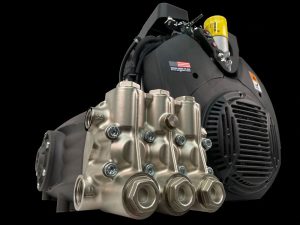
    The two most common pump problems operators say they have are “low pressure” or “no pressure.” Actually, the pump is the most durable part of your pressure washer. In my experience, usually what people think is a pump failure or problem isn’t caused by the pump at all.

    While there are multiple possibilities why each of the following problems can exist, here are the most common. For accurate pump troubleshooting, you’ll need to have a pressure gauge on hand. 

    Low Pressure

    Low pressure is usually not a result of a pump malfunction. Often it’s a water supply issue, and occasionally it’s the unloader. To start troubleshooting, you’ll need to observe what your equipment is doing. When you open the trigger gun and your water is flowing, what does your pressure gauge say? Let’s say your pressure gauge is reading 2000 PSI, and you normally run at 3500 PSI. When you release the trigger gun, does the pressure go up before the unloader goes into the bypass? If so, that means the pump and the unloader are working and that you have a water supply problem.

    Read full article in Cleaner Times magazine >>

  • 3 Steps to Power Through Your Business to the Next Level

    3 Steps to Power Through Your Business to the Next Level

    If you own a power washing business and you’re ready to grow your business, read on! Consider adding sewer jetting to expand your commercial and residential offerings. EnviroSpec can help you achieve your dreams of increased revenue in three steps. Spoiler alert! By following our advice, you can (1) experience a significant market share increase; (2) get more money for your services in the same amount of time; (3) work and invest smarter, not harder. If you’re ready to expand your business and have positive effects spill onto your other services, this article is for you.

    Step One – Discover the Cash Cow of Sewer Jetting

    Sewer jetters are high-powered drain cleaning machines to clear obstructions in pipes. Expanding into sewer jetting can generate a steady return of profits that far exceed the outlay of cash required to start this line of business.  Will adding sewer jetting services really grow your business?  If you’re willing to plan, commit and follow through, the answer is yes! How would you like to get paid 3x’s the amount you’re currently getting per job? By adding sewer jetting services to his business line, Dan Hatcher of Jacksonville, Florida did just that.

    “The key is to identify where you have a sweet spot and broaden your horizons,” Hatcher said. “Let’s say a someone already has a restaurant’s power washing business, and they charge $100 an hour to power wash and clean the asphalt and surrounding surfaces. That’s good money. But all restaurants have sewer drains that will get clogged. When your client calls you for your sewer jetting help, you can earn $300 for the same amount of time.”

    The Down and Dirty of Sewer Jetting

    Unlike power washing appointments that are scheduled in advance, most of the sewer jetting job requests will be time sensitive and require scheduling agility.

     “I lost a job opportunity because of the customer’s time urgency,” Hatcher said. “I was on a different job when a call came in from a restaurant needing help because their sewer was backed up.  I accepted the job but told them I couldn’t be there for another hour and a half to give me time to finish my current job and get over to them. The customer called me back within the half hour and let me know they found someone else who could get there immediately.”

    You will operate in a win-some/loose-some environment with sewer jetting contracts. But as Hatcher experienced, the next call the timing might favor you. “It all balances out,” Hatcher said. “There’s enough work and demand to go around. It’s a necessary service. Sewer jetting service is a great income-generating addition to a power washing business.”

    Despite the on-call nature of sewer jetting work, the opportunities are abundant, Hatcher said. “It’s a dirty job and you can get calls for emergency jobs at all hours. But it’s lucrative, and with some basic equipment modifications and investments you can grow your business exponentially because of the demand.”

    Step Two – Invest in Your Future

    As a businessperson you’re already familiar with the expression, you have to spend money to make money.  It’s true. It’s hard to grow your business without investing additional money in supplies and products. The key here is to spend smarter.

    “If you have a power washing business, you have the basic equipment you need to get started in sewer jetting,” said EnviroSpec President and CEO, Dan Galvin. That equipment includes the pressure washer, the hoses, and a trigger gun. For those just trying sewer jetting, Dan recommends retrofitting the hoses already on hand and investing in a starter pack of nozzles. Time is money so you don’t want to spend an hour with a cheap nozzle when you can do the job in five minutes with a more substantial nozzle according to Dan.

    “As they get more jobs, I recommend they invest in a sewer jetting hose, which is non-abrasive, flexible and allows for bending around the pipes. Other items would include sewer jetting valves, hoses, hose reels, a foot pedal kit, water tanks and then upgraded nozzles which are key but can run around $1000 a piece and up,” said Dan.

    Dan said he knows of businesses that went under because someone convinced the owner to buy expensive equipment that they really weren’t ready to use. Without demand to use the equipment, it became a lability rather than an asset. “I always advise my customers, get the jobs first then the equipment.”

    For entrepreneurs looking to expand into larger commercial accounts or municipal contracts, EnviroSpec also has sewer jetting engines and pumps available to meet any large-scale professional sanitation services required.

    Step Three – Power Moves

    Before accepting any sewer jetting jobs, be sure to check your area’s requirements. Ordnances vary and some locations may require certifications to perform the work.

    Just as you already have the basic equipment on hand, you also have your current commercial and residential clients needed to scale up your business. You’ve already earned their trust with your power washing services, let them know your offering additional value to them through drain and sewer cleaning.

    Keep in mind no business can afford operational interruptions due to clogged sewer drains. Not only can your business save the day for your customers you can make good money doing so. As Dan likes to tell his customers, “If you think you made good money power washing, just wait until you add sewer jetting to your services!”

  • EnviroSpec Feather Weight Dual Lance

    EnviroSpec Feather Weight Dual Lance

    EnviroSpec Feather Weight Dual Lance

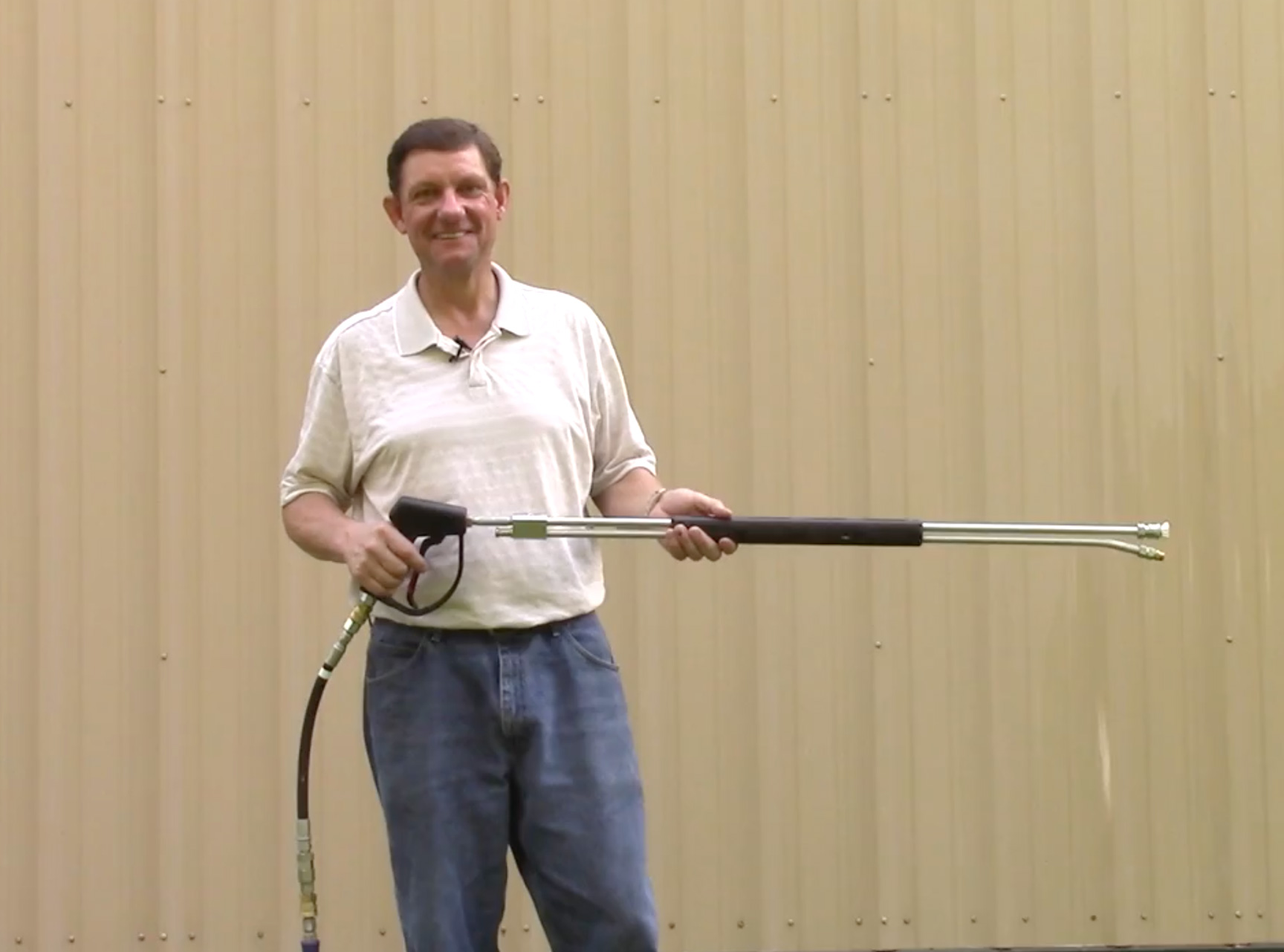
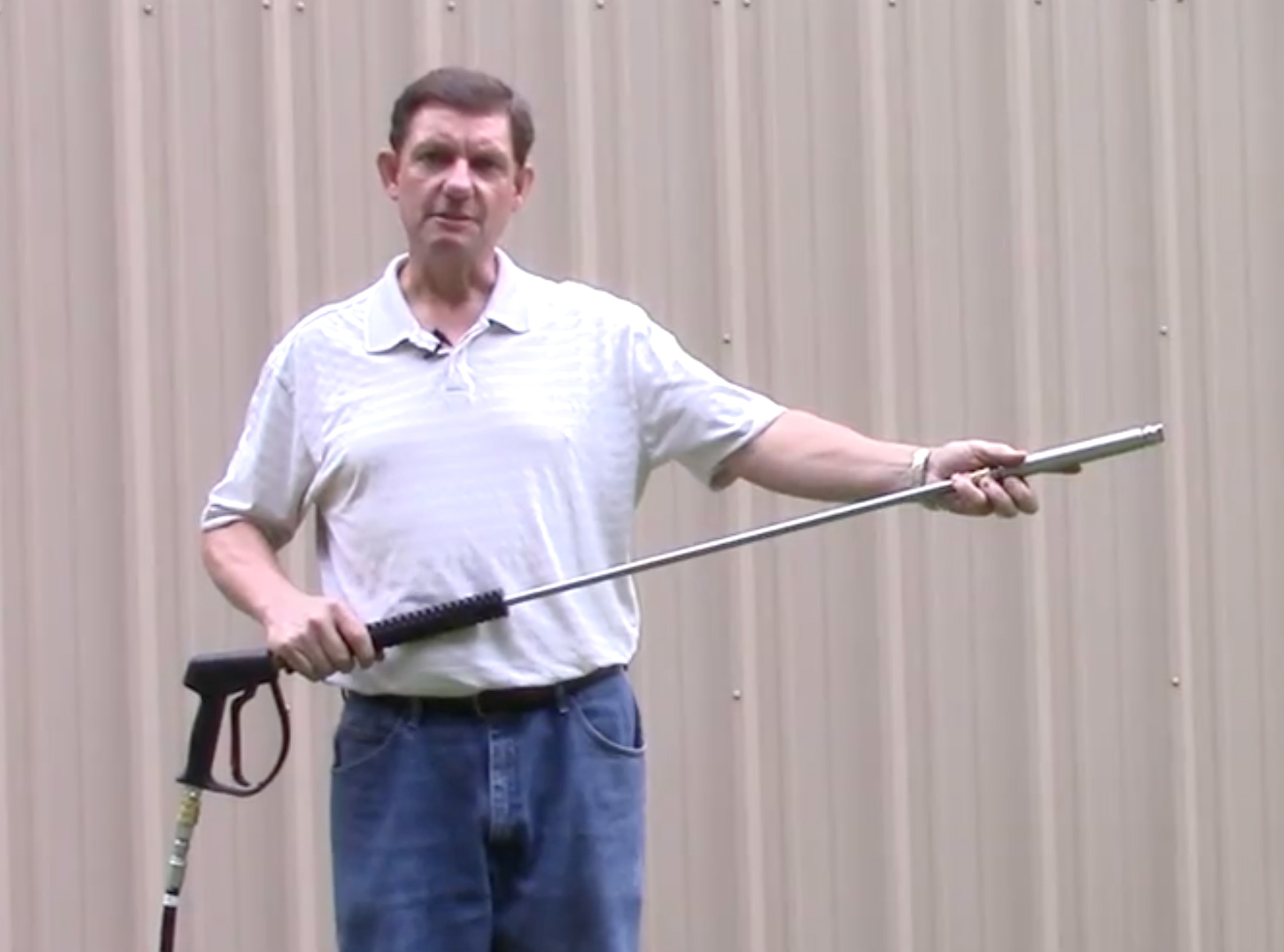
    Dan Galvin, president and CEO of EnviroSpec, demonstrates the use of the feather weight dual lance which weighs just over one pound. And switching from soap to high pressure couldn’t be more simple.


  • DG63 Unloader from EnviroSpec

    DG63 Unloader from EnviroSpec

    DG63 Unloader from EnviroSpec

    Dan Galvin, president and CEO of EnviroSpec, demonstrates the DG63 Unloader. You can use a 3/8″ or 1/2″ bypass line with it and it won’t surge or pulsate. It only takes one finger to pull the trigger.


  • Allison Foamer with Foam Turbine Injector

    Allison Foamer with Foam Turbine Injector

    Allison Foamer Demonstration

    Dan Galvin, president and CEO of EnviroSpec, demonstrates the Allison Foamer with the Allison Foam Turbine Injector. The foamer comes with a fan spray nozzle and a zero degree nozzle for heights.


  • Dan demonstrates the use of our new Reaper Nozzle

    Dan demonstrates the use of our new Reaper Nozzle

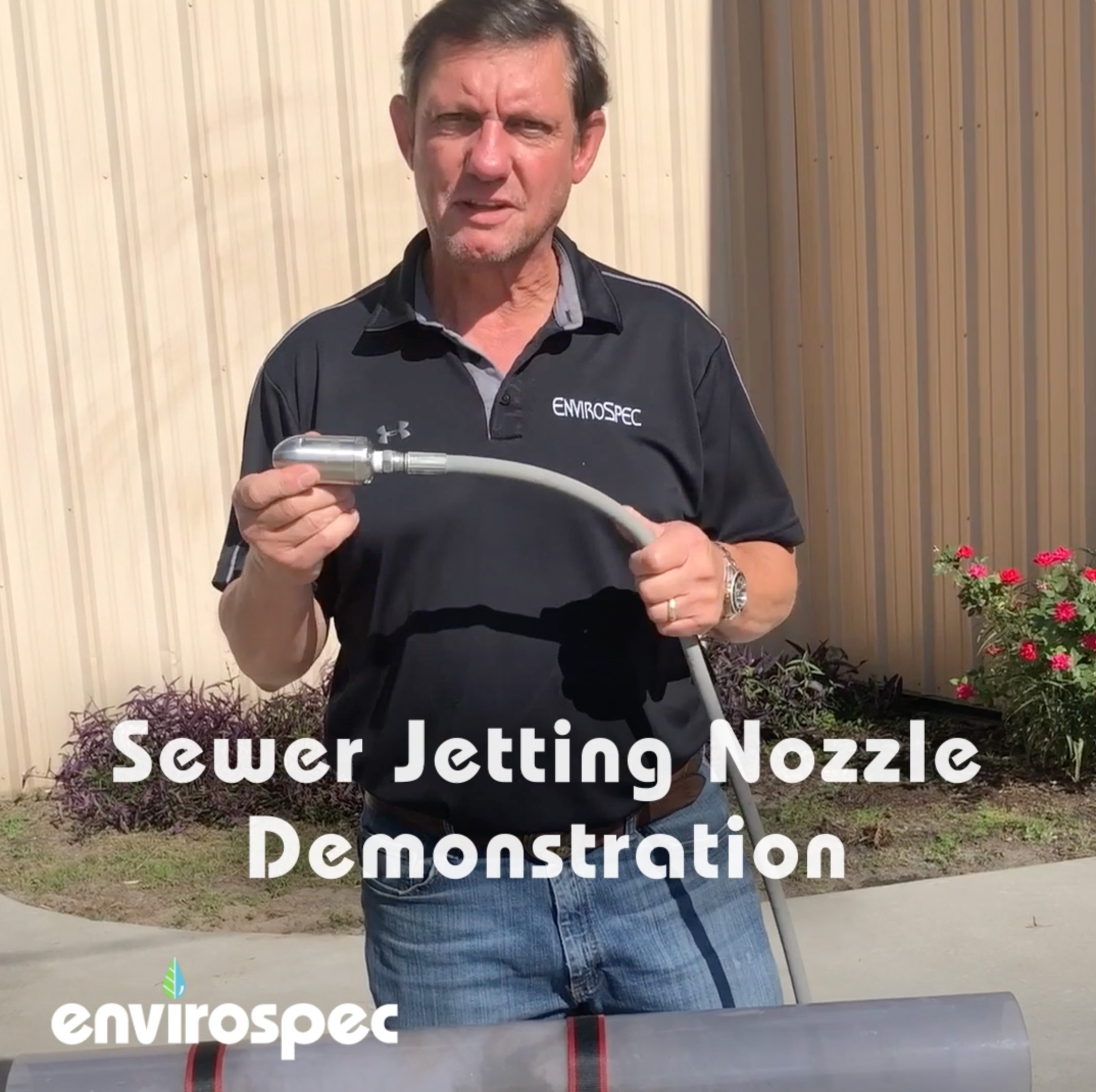
    Reaper Nozzle Sewer Jetting Demonstration

    Dan, the owner of EnviroSpec, shows us a sewer jetting Reaper nozzle demonstration.


  • Turning Your Dreams Into Passions

    Turning Your Dreams Into Passions

    Follow your passion 10
    You know a dream is like a river ever changin’ as it flows and a dreamer’s just a vessel that must follow where it goes – trying to learn from what’s behind you and never knowing what’s in store makes each day a constant battle just to stay between the shores ~ Garth Brook’s The River — Dreams can turn into passion and when they do you have just run the first and most important leg of the race. ~ John Allison, EnviroSpec

    All Power Washers know they want the freedom and wealth that a power washing business can bring, but many are confused on what they need to do to get it. So they chase one power washing job after another, like a kid chasing one bright shiny object after another as they search for the right fit.

    They get real excited about their latest venture but that excitement quickly fizzles out when they realize how hard it is to get more clients not to mention the work involved. It’s not that they are lazy.  It’s that they are doing things they simply are not passionate about or good at.

    They also get excited by the lifestyle possibilities that the Power Washing business offers but forget to consider if the business is truly aligned with their values, passions and talents.

    As a want-to-be professional power wash contractor one of the first things you need to do is become very clear about what is most important to you as it relates to both your life style as well as your power washing career.

    Once you are clear on the inside about who you are and what you are willing to do, you’ll become clear on the outside about what you need to do to become one of the 15% who actually go on to be successful and professional contract cleaners.

    This simple inner exploration will save you years of wandering and searching for answers. Once you “turn your dreams into passions” success will follow!

    And remember to Power Through!

  • Two-Step or Twin-Chem Truck Washing

    Two-Step or Twin-Chem Truck Washing

    TTrailer-CartoonThe Miracle of Twin-Chem Truck Washing

    In 1972, while on one of my first truck washing jobs, I witnessed an event not explicable by natural or scientific laws. Yes, I witnessed the miracle of twin-chem acid truck washing.

    A few weeks prior to that job I told my friend, Steve Gerimonte, a sales rep for a raw material chemical supplier, that I was going to start a job washing trucks at Stroeman’s Bakery in East Hartford, Connecticut. When I first saw the trucks, I noticed that the bottom rails of the trailers were unpainted aluminum and they looked terrible. In fact, everything looked terrible. Stroeman’s was one of those companies who washed their truck once a year at best and, naturally, they wanted them washed for nothing.

    I asked Steve what he thought I should use to clean those disgusting aluminum rails. A few days later, Steve stopped by the shop to drop off a hydrofluoric acid (HF) product that his company produced and sold to the metal plating industry. He said “try this but be careful!”

    The next Saturday I showed up at Stroeman’s with the anticipation of being there all weekend just to wash 12 trailers. Yes, they were that bad. The first trailer I washed took 2-1/2 hours. At $18 a trailer you can see that I was really making a lot of money.

    I brushed and scrubbed that trailer body until it looked about 50% better. I was so tired that I couldn’t scrub anymore. Then it was time for those bottom rails and Steve’s magic potion, the HF cleaner that he dropped off earlier. I applied it with a downstream injector and after several passes the aluminum looked like new — or close.

    I know! I told you about witnessing a miracle, so here it is.

    So now I am ready for my next trailer. Yes, I am exhausted but like most mobile washers I was determined to finish the job as best I could. After a 10-minute break, I fired off my pressure washer (the one I built — 1,000 psi @ 3.0 gpm), picked up the wand and started soaking down the next trailer. I soaked and soaked and soaked and nothing seemed to be happening. Then I noticed that the bottom rail was coming clean. Oh my God! I have just sprayed acid all over the paint! Within a split second I had already conjured up illusions of having to repaint the trailer, losing the account or even worse — a lawsuit. My insurance? What insurance?

    I quickly removed the chemical line from the acid jug and put it in the detergent jug and began to spray soap over the acid hoping that I could get the acid off before too much damage occurred. And there it was — the miracle.

    Before my very own eyes I saw grease, dirt, and oxidation start running down the side of the trailer, leaving behind a surface that resembled a new paint job. At the time I was clueless as to what I had just witnessed. The only thing I could think of was to keep spraying acid and then soap on every trailer on the lot. Remember the first trailer that took 2-1/2 hours? The remaining 11 only took 2-1/2 hours, and they looked brand new.

    Yes, twin-chem cleaning is, by far, the fastest and most effective method of cleaning almost every type of surface. It also leaves behind the nicest looking job. But not many mobile truck wash companies utilize twin chem for fear of surface damage. Face it, just the thought of applying acid to a painted surface will create illusions of disaster just like it did for me at Stroeman’s Bakery. The simple truth is most acids formulated for twin-chem truck washing will not harm painted surfaces. Glass, on the other hand, does require special attention. It can be damaged if hydrofluoric acid is not applied and rinsed properly. Phosphoric acid cleaners will not harm glass and are recommended over hydrofluoric.

    The general rule of thumb in twin-chem cleaning is to use a hydrofluoric acid “step 1” every fourth or fifth service in order to keep the rails and other exposed aluminum bright and shining. Using this alternating process will lessen the possibility of glass damage in the event proper precautions are not taken or mistakes are made.

    Alternating with a phosphoric acid will provide an excellent acid/alkali surface contact reaction and keep the rails clean. Another huge benefit of using a phosphoric acid as your step 1 is the appearance of unpainted aluminum. While hydrofluoric acid is the quickest, it leaves the aluminum “frosted or dull” while phosphoric acid leaves aluminum with a much more polished look. Another benefit of phosphoric acid is that it is less dangerous to use. The next time you drink a can of Coke look at the ingredients. You might be surprised.

    The process

    Remember ACID goes on FIRST and SOAP goes on SECOND over the acid!

    To start the twin-chem acid truck washing, hold the lance pointed upward and pull the trigger so you will be able to see which way the wind is blowing.  Always work with the wind. For instance, if the wind is blowing left to right, work left to right.

    When washing a trailer we recommend that no more than half of the entire unit be cleaned at one time. For instance, you would not apply product to more than one side and either the back or the front.

    Apply the acid from the bottom to the top. Applying the acid to the top aluminum rails prior to misting the entire surface will result in aluminum oxide that is removed from the top rail will lock itself onto the painted surface below. When this happens, heavy brushing will be required.

    After the painted surface has been wet down with acid, you will then concentrate on the exposed, unpainted aluminum trim. Hold the low pressure chemical nozzle close to the top rail and quickly walk the rail until you reach the end. Move the nozzle to the lower rail and walk back in the opposite direction. When you reach the end of the lower rail – repeat the process. Once the acid has been applied you are now ready to apply the detergent.

    When washing a tractor, you would clean one side at a time. Wash the back and the frame on one pass and then other side, roof, hood and front on your last pass. In some situations, especially when the ambient temperature is above 90°, you may have to clean a smaller area in order to keep the product from drying.

    In twin-chem truck washing, never apply hydrofluoric acid to the top of the tractor or directly to the windshield or wiper blades. Once hydrofluoric get on the wiper blades it cannot be neutralized.  Every time the wipers are turned on the blades are rubbing hydrofluoric acid into the glass.  If you have washed tractors in the past chances are that you have seen the end result of the problem.  It show us on the windshield where the wiper touches the glass.  When this happens you may as well replace the glass.

    Detergents

    At this point you will have to move your chemical line from the acid container to the detergent container.

    BE CAREFUL of cross contamination of products which will result in product neutralization. To eliminate the concern you should equip your EnviroSpec Super Suds Sucker injector with a dual chemical switching valve. With this option all you will have to do is simply turn the knob from acid to detergent.

    When applying the detergent — repeat the steps utilized with the acid application with one exception — make one additional pass with detergent. Generally speaking, it will take twice as much detergent as acid for an effective twin-chem process.

    When the detergent comes in contact with the acid you will immediately notice dramatic surface activity whereby the pollutant will totally emulsify and “roll off” the surface.

    Rinsing trailers

    Rinsing is, without question, one of the most important steps in twin-chem acid truck washing. You want to get the product off the surface before it has time to dry. If you will use our product Speed-X-777 in your detergent mix. This product will decrease your rinse time by 70%

    Remember, upon switching your gun from “low-pressure chemical” to “high pressure rinse”, you still have detergent in the line which will be discharged under high pressure. Rather than clearing you hose up high where you stand a chance of getting a high pressure mist of soap in the air that can land on other surfaces that can be damaged if not rinsed it is best to clean your hose in the wheel or wheel well or on the frame.  Since these areas are generally the hardest to clean the high pressure soap will make cleaning process a lot easier.

    When rinsing the trailer start by “walking the top rail” very slowly to insure that ALL chemical products and pollutants have been thoroughly removed so they don’t seep-out and leave unsightly streaks after you have rinsed the rest of the trailer body. Once you are sure the top rail has been sufficiently rinsed — continue with the remaining area to include the wheels, tanks and frame which are always cleaned last.

    Rinsing tractors

    Pay special attention to the roof and glass when rinsing tractors. Always rinse from the top down.

    You will find it next to impossible to thoroughly rinse the roof and hood areas if you are using a “straight” lance. Make sure that the lance has a 45-degree bend at the nozzle. Failure to rinse the roof WILL result in glass damage. Since it is impossible to keep all cleaners off the roof it lays there until the water has evaporated, leaving behind a chemical residual. Through the night moisture brings that dried chemical back into solution.

    The next morning the driver gets in the tractor and the first time he hits the brakes that solution runs down over the glass and onto the wipers. Now, he hits the wipers to clean the residual off of the windshield and here starts the never-ending problem. The chemical remains in the wiper blade and continues to “burn or frost” the windshield every time he hits the wipers. If you are not sure if the roof has been rinsed thoroughly — stand on the drivers or passengers side of the vehicle and look through the side glass and through to the windshield. Hold the lance in a position so that the rinse water will be running down over the windshield. Rinse until you do not see “bubbles.” You can only do this if you have a 45-degree adapter on the end of the lance. Simply order our part No. BRF634 and install it on the end of the your 48- or 60-inch lance, then reinstall the nozzle.

    Recommendations for Single or Twin-Chem Acid Truck Washing

    • Recommended PSI and GPM: 2,000 PSI · 5.6 GPM. Remember cold water works fine but hot water works even better!
    • Recommended Chemical Injector: EnviroSpec Super Suds Sucker (Brass Part No. 1964, Stainless Steel Part No. 1964-SS ) with a Time Saver Remote (Part No. TS REMOTE)
    • Recommended Trigger Gun: EnviroSpec’s “YG5000C” (Part No. 1221)


    On the inlet side of the gun install a “hose whip” (Part No. 1568) to take the hose strain off the gun when you are pulling it. On the end of the hose whip install a quick connect plug so you can connect the high pressure hose.

    Install a 3,000-PSI ball valve (Part No. 1303) on the discharge side of the unloader (between the unloader and gun). Setting the system up like this will allow you to change gun/lance assemblies quickly when need be.

    • Recommended Lance: Single Pipe-Stainless Steel Lance. 48-inch for tractors and 60-inch for trailers (Part No. 1248) with 45-degree street elbow (Part No. BRF634). Each lance should have a 45-degree bend at the nozzle.
    • Recommended Chemicals: For acid, due to the shipping cost we no longer manufacture acids used in twin-chem truck cleaning. If you need help finding a supplier contact us at (800) 346-4876. For detergents, all of our detergent products have been formulated around the twin-chem cleaning process and all have the proper pH balance range. They provide superior performance with all acid cleaners use in twin-chem cleaning.


    In terms of detergents, we specifically recommend:

    • PRODIGY — The industry’s No. 1-selling acid truck wash. This product provides superior cleaning results either as a stand-alone cleaner or as step-2 in the twin-chem cleaning process. Below are specialty variations of Prodigy formulated for specific jobs.
    • LX9 — Specialty heavy-duty truck cleaner with lavender and coconut.
    • MR. MUSCLE — To be used when there is a heavy buildup of exhaust carbon.
    • BOND BREAKER — Formulated to remove all road film.
    • VIPER — Superior product for white tractor/trailer bodies. Great product for heavy build-ups of exhaust carbon
    • CHISEL — Formulated for the initial cleaning of vehicles that have been neglected or are cleaned on a quarterly, semi-annually or annual basis.


    For more technical support, call us at (800) 346-4876.
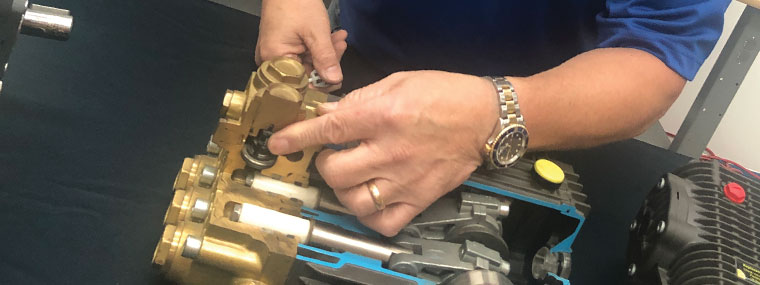
  • How a Pump Works

    How a Pump Works

    Pressure washer pump -1

    What a Pump Actually Does

    A pump moves a column of water to create a flow. Pressure results from a restriction on than column of water as is the case when the water passes through a nozzle. When we speak of a pump’s ability to create a certain pressure at a certain flow, what we really mean is that the pump is capable of moving that amount of water per minute through a nozzle or restriction which actually creates the specified pressure.

    To create a flow of water, most pumps used in the pressure cleaning industry rely on a system of valves and cylinders. The movement of a plunger or piston in the cylinder draws water through the inlet valve and the upstroke expels it through the outlet valve. The valves basically direct the water through the pump by preventing backflow.

    The simplest valve design consists of a spring and poppet and is hydraulically operated by differences in pressure on either side of the valve. When pressure against the valve exceeds the ability of the spring to hold the poppet closed, the valve opens. On the opposite stroke, water itself presses the poppet against its seat, holding the valve closed and preventing flow of the water in the wrong direction.

    The flow of water through the pump can be controlled in three ways, by increasing or decreasing the bore of the cylinder, by lengthening or shortening the stroke of the piston or plunger or by increasing or decreasing the speed at which the pump operates.

    The above information is relevant to all pressure washer pumps manufactured by A-R North America, General Pump, Comet Pump, Giant Pump, Udor Pump, Hawk Pump, Landa Pumps, Mi-T-M Pumps, Hydor Tek Pumps, Pressure Pro Pumps, EnviroSpec Severe Duty Pumps, and other pumps found on equipment utilized by professional mobile pressure washers.


Login to your account